
Why Your Website Gets Traffic but No Leads or Sales in 2027
Your website attracts visitors, your marketing campaigns generate clicks, and your pages may even rank on Google. However, if those visitors are not contacting your business or purchasing your products, your website is not delivering the results you need.
Website traffic alone does not guarantee business growth. Visitors must understand your offer, trust your business, recognize the value of your services, and find it easy to take the next step. When any of these elements is missing, potential customers leave without converting.
In 2027, businesses need to focus on more than SEO rankings and visitor numbers. A successful website combines targeted traffic, persuasive messaging, professional design, strong credibility, and a clear conversion strategy.
This guide explains the most common reasons websites generate traffic without leads or sales and how to fix these problems to turn existing visitors into valuable business opportunities.
How to Improve Your Google Business Profile in 2027
Your Google Business Profile can help potential customers discover your business through Google Search and Google Maps. When people search for local services, they often compare business information, customer reviews, photos, and available services before deciding whom to contact.
If your business profile is incomplete, outdated, or poorly managed, you may miss opportunities to attract local customers. A well-optimized profile helps people understand what your business offers, where you operate, and how they can contact you.
In 2027, businesses should focus on accurate information, genuine customer reviews, relevant photos, and a strong local SEO strategy. These improvements can help build trust, increase customer engagement, and strengthen your online presence.
This guide explains how to improve your Google Business Profile using practical steps that business owners can implement without relying on misleading ranking tricks.
How AI Search Is Changing SEO and Content Marketing in 2027
Artificial intelligence is transforming how people search for information, discover businesses, and make purchasing decisions. Traditional search engines primarily presented lists of links, leaving users to visit multiple websites to find answers. AI-powered search experiences are changing this process by generating summaries, answering complex questions, and recommending relevant sources directly within the search experience.
In 2027, businesses will need to adapt their SEO and content marketing strategies to remain visible in an increasingly AI-driven digital landscape. Ranking on the first page of Google will still matter, but earning visibility in AI-generated answers, building topical authority, and delivering genuinely useful content will become increasingly important.
For businesses investing in digital growth, understanding these changes is essential. A modern SEO strategy must combine technical optimization, high-quality content, user intent, and brand credibility to attract relevant audiences and generate measurable results.
How SEO, Web Design, and Branding Work Together to Grow Your Business
Your business needs more than a website to succeed online. It needs to be visible on search engines, provide a professional user experience, and communicate a clear, consistent brand identity. When SEO, web design, and branding work together, they help your business attract potential customers, build credibility, and generate sustainable growth.
Many businesses invest in one area while neglecting the others. A beautiful website without SEO may struggle to attract visitors. Strong SEO without effective web design may bring traffic that never converts. Inconsistent branding can make your business difficult to recognize and trust.
The real opportunity comes from combining these three essential elements into one strategy.
How to Build Brand Consistency Across Your Website and Social Media
Building a recognizable brand requires more than an attractive logo or a well-designed website. Your business needs a consistent identity across every digital touchpoint, including your website, social media profiles, advertisements, and marketing content. When your brand uses the same visual elements, tone of voice, messaging, and personality across platforms, customers can recognize your business more easily and develop greater confidence in your services.
Brand consistency also helps businesses communicate their values, differentiate themselves from competitors, and create a more professional customer experience. Whether you operate a small business, an e-commerce store, or a digital marketing agency, establishing clear brand guidelines can make your marketing more effective. This guide explains how to build brand consistency across your website and social media using practical strategies that support long-term business growth.
On-Page SEO vs. Off-Page SEO: Key Differences and How to Improve Google Rankings
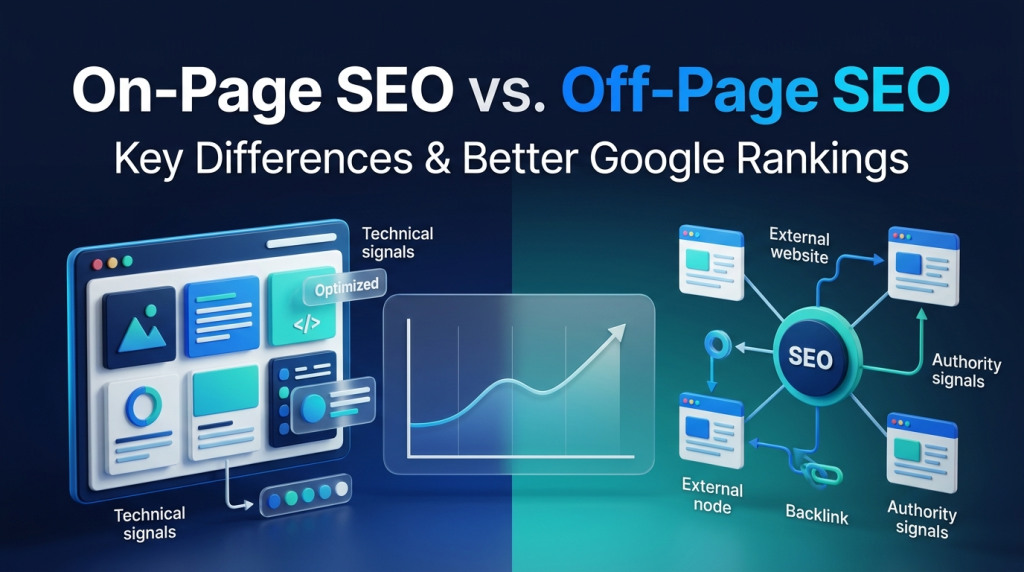
Search engine optimization (SEO) is essential for improving website visibility, attracting organic traffic, and reaching potential customers through Google. However, achieving higher rankings requires more than publishing content or building backlinks. Two fundamental components of SEO are on-page SEO and off-page SEO. While on-page SEO focuses on optimizing elements within your website, off-page SEO builds your website’s authority and reputation across the internet. Understanding the differences between these strategies helps businesses create a balanced SEO plan that delivers sustainable results, improves search visibility, and generates more qualified leads.
How to Choose a Digital Marketing Agency for Your Business

Choosing the right digital marketing agency can help your business attract customers, generate qualified leads, build brand awareness, and increase sales. However, with so many agencies offering SEO, social media marketing, paid advertising, content creation, and website development, finding the right partner can be challenging.
A professional website and impressive promises do not automatically guarantee results. You need an agency that understands your business goals, knows your target audience, recommends suitable marketing strategies, and measures performance using meaningful business metrics.
This guide explains how to evaluate a digital marketing agency, compare its services, recognize warning signs, and make a confident decision for your business.
How Social Media Marketing Can Help Build Long-Term Customer Relationships
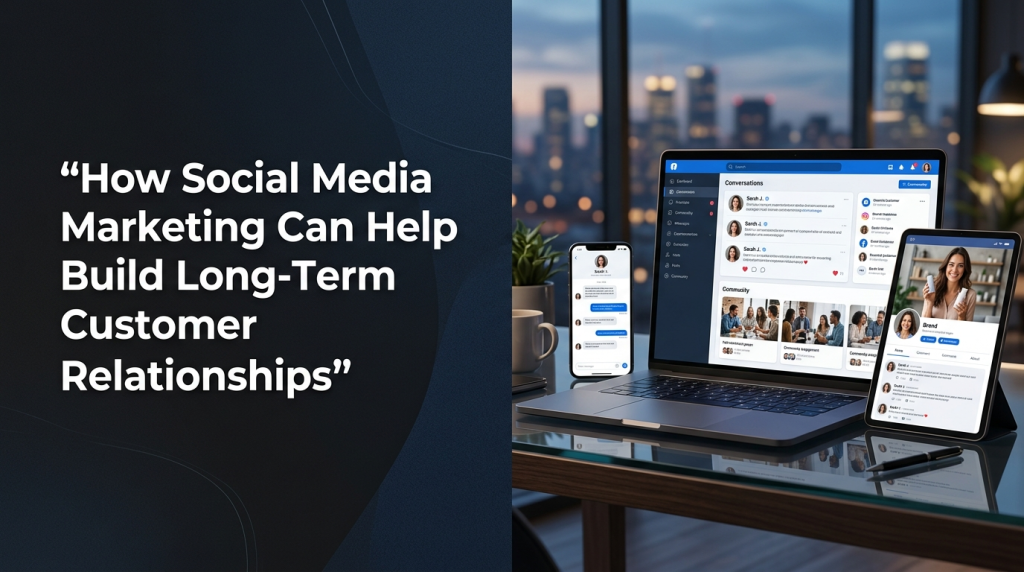
Social media marketing is no longer only about increasing followers or promoting products. For businesses, it has become an important way to communicate with customers, build trust, encourage engagement, and develop relationships that can continue long after the first purchase.
Customers want to interact with brands that understand their needs, respond to questions, provide useful information, and consistently deliver value. Social media gives businesses an opportunity to create these connections through regular communication and relevant content.
With a strategic approach, social media marketing can help businesses turn one-time customers into engaged followers and loyal customers while creating a stronger connection between the brand and its audience.
How Small Businesses Can Build a Strong Digital Presence From Scratch
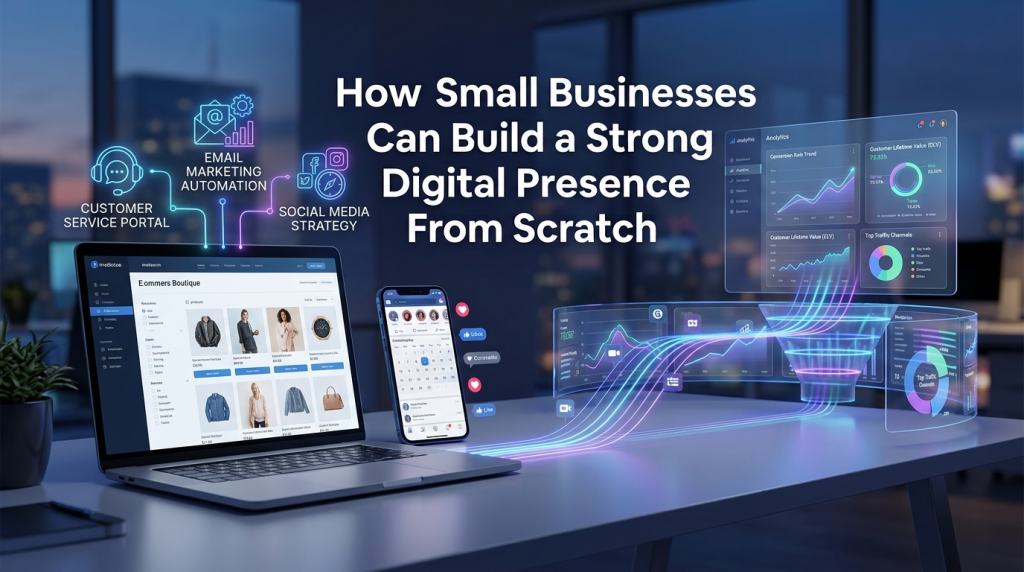
Building a strong digital presence is no longer optional for small businesses. Potential customers often search online before contacting a company, visiting a location, or making a purchase. If your business is difficult to find online or has an outdated presence, you can miss valuable opportunities.
The good news is that small businesses do not need a huge budget or a complicated marketing system to establish a strong online presence. By starting with the right foundation and gradually building your website, search visibility, social media presence, branding, and content strategy, you can create a digital ecosystem that supports long-term business growth.
How to Create a Digital Marketing Strategy for Your Small Business
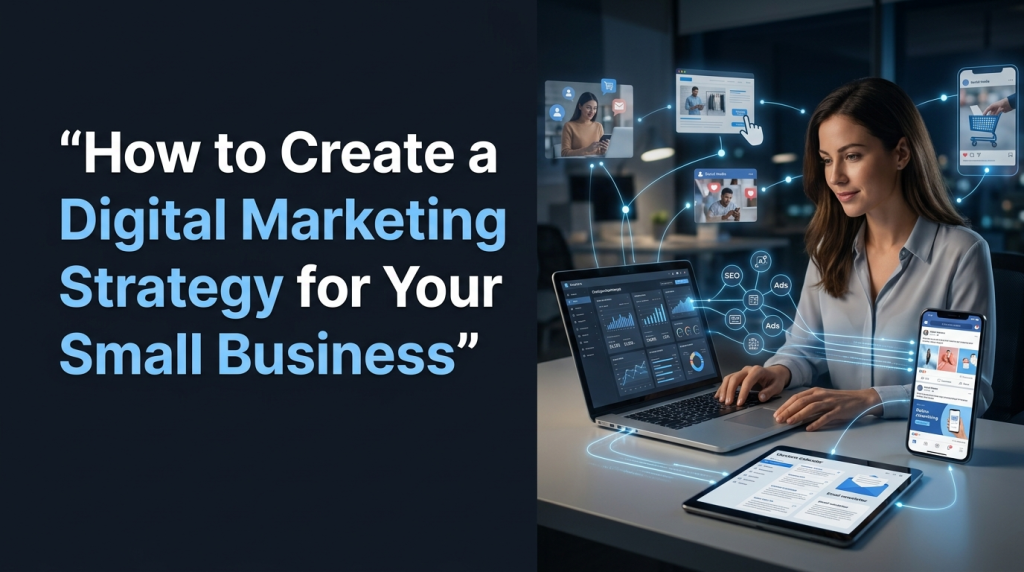
A strong digital marketing strategy can help a small business attract the right audience, build brand awareness, generate leads, and increase sales. Instead of promoting your business randomly across different platforms, a clear strategy gives you a structured approach to reaching potential customers and turning them into loyal clients. From identifying your target audience to creating valuable content and measuring performance, every step plays an important role in building a successful online presence.
For small businesses, digital marketing can also provide opportunities to compete with larger companies without requiring an enormous marketing budget. With the right combination of SEO, social media, content marketing, website optimization, and paid advertising, you can reach customers where they already spend their time online.