
Menu
Why Local Businesses Are Investing in Modern Website Design to Attract More Customers
A modern business website is more than an attractive homepage. It combines responsive design, clear messaging, intuitive navigation, fast performance, useful content, and strong calls to action. When these elements work together, a website can become a powerful tool for generating enquiries and supporting long-term business growth.
1. Why Local Businesses Need a Strong Online Presence
Customers often use search engines to discover local businesses and compare their options before making a decision. A professional website gives businesses control over how they present their services, expertise, location, and value.
Without a strong online presence, a local business can miss potential customers who are actively searching for its products or services. A modern website makes important information available around the clock and gives visitors a convenient way to learn about the business.
2. How Modern Website Design Creates a Better First Impression
A website is often one of the first interactions a potential customer has with a business. Its appearance, structure, content, and usability can influence how visitors perceive the company.
Professional layouts, consistent branding, readable typography, quality images, and clear navigation make a website easier to understand. Modern design is not simply about adding visual effects. It is about presenting information in a way that helps visitors quickly understand what the business offers.
3. Why Mobile-Friendly Websites Are Essential
Local customers frequently use smartphones to search for nearby businesses. If a website is difficult to read or navigate on a mobile device, potential customers may leave before contacting the business.
Responsive website design allows pages to adapt to smartphones, tablets, laptops, and desktop computers. Buttons, forms, menus, images, and text should remain functional and easy to use regardless of screen size.
For businesses that depend on local enquiries, mobile responsiveness is no longer an optional feature. It is a fundamental part of professional website development.
4. How Websites Can Generate More Customer Enquiries
A business website should have a clear purpose. For many local companies, that purpose is generating phone calls, enquiries, bookings, consultations, or visits.
Strategically placed calls to action can encourage visitors to take the next step. Examples include “Contact Us,” “Request a Quote,” “Book a Consultation,” and “Call Now.”
Dedicated service pages can also provide detailed information about individual offerings. Instead of sending every visitor to a general homepage, businesses can create focused pages designed around specific services and customer needs.
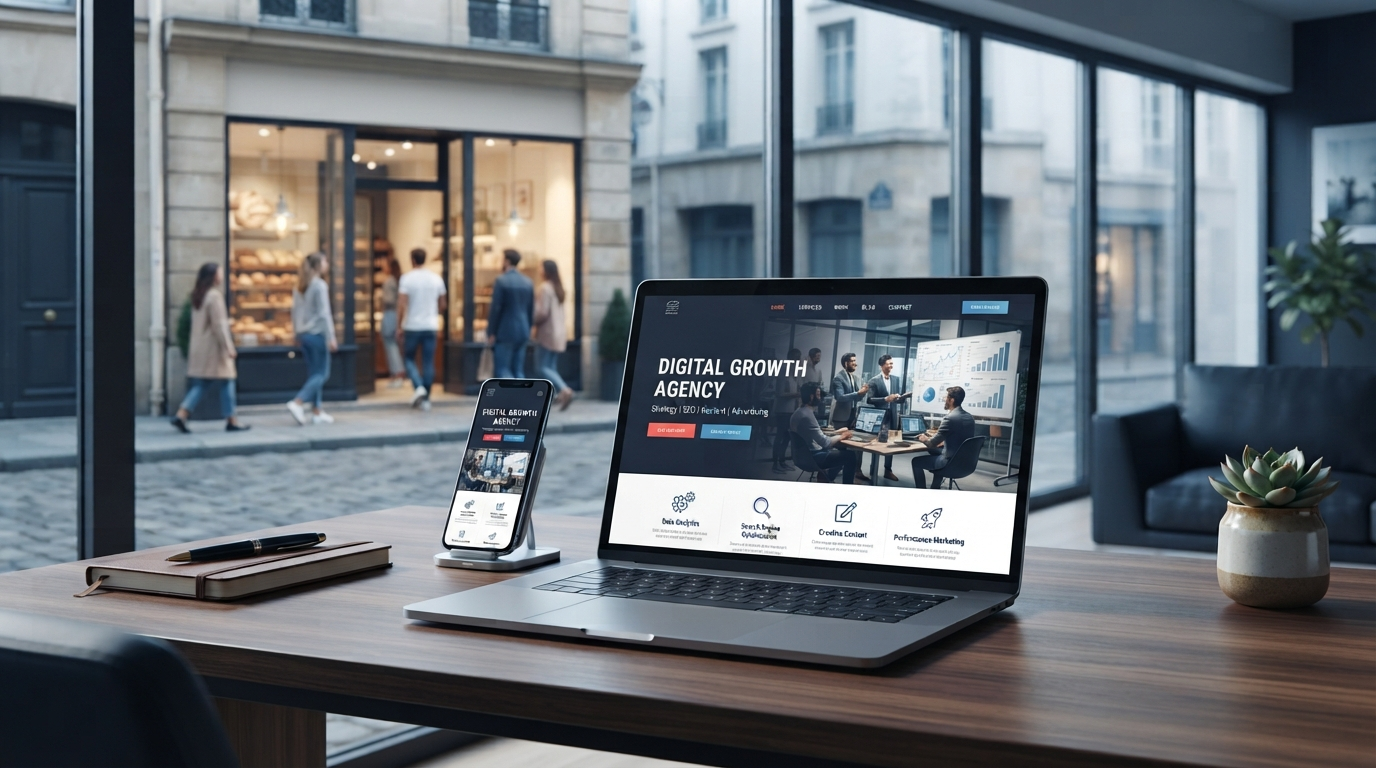
5. How Website Design Supports Local SEO
Having a website does not automatically guarantee search engine visibility. Businesses need a website structure that supports search engine optimization and provides useful information to their target audience.
Modern website development can incorporate logical headings, descriptive content, internal links, mobile responsiveness, fast-loading pages, and clear information architecture.
Local businesses can also create service-specific and location-focused content to communicate relevance to customers searching in particular areas.
Businesses that want to improve organic search visibility can combine website development with professional SEO services.
6. How a Professional Website Strengthens Local Branding
A local business needs more than search visibility. It also needs recognition.
A professionally designed website provides a central platform for presenting the company’s brand consistently. Visual elements such as colors, typography, photography, graphics, and messaging can be aligned with social media, advertisements, printed materials, and other marketing channels.
Consistent branding helps customers recognize the business across different platforms and creates a more unified experience.
7. How Small Businesses Can Compete More Effectively
Large companies often have larger marketing budgets, but local businesses can still build a strong digital presence through strategic website design.
A professional website allows a small business to highlight its expertise, services, experience, customer benefits, and unique selling points. It can also communicate specialized services that larger competitors may not emphasize.
The objective is not to make a small business look like a multinational corporation. Instead, the website should accurately communicate the quality, professionalism, and value of the local business.
8. Why Businesses Are Redesigning Outdated Websites
Some businesses already have websites but continue to struggle with poor performance. An outdated website can have several problems, including slow loading speeds, confusing navigation, weak mobile usability, outdated content, inconsistent branding, and unclear calls to action.
A website redesign can address these problems by improving the visual structure, content organization, functionality, performance, and user experience.
Not every business needs to rebuild its website from scratch. Sometimes targeted improvements can produce significant results. A professional assessment can help determine whether a redesign, rebuild, or optimization strategy is appropriate.
9. How Modern Websites Support Business Growth
A website should not only meet today’s requirements. It should also provide room for future growth.
Businesses may add new services, target additional locations, publish educational content, launch advertising campaigns, or introduce new lead-generation systems. A scalable website structure makes these changes easier to implement.
Professional website development services can help businesses build websites around their current requirements while allowing flexibility for future expansion.
Frequently Asked Questions
A modern website helps a business present its services professionally, provide important information, improve online visibility, build credibility, and make it easier for potential customers to get in touch.
Yes. Professional design, consistent branding, clear information, and easy navigation can contribute to a more credible online experience.
Yes. Customers frequently search for businesses using smartphones, so websites should provide a smooth experience across mobile devices, tablets, and desktop computers.
Yes. Contact forms, phone links, booking systems, landing pages, and strategically placed calls to action can encourage website visitors to become leads.
Yes. Website structure, mobile responsiveness, page organization, internal linking, content, and performance can support a broader SEO strategy.
No. Some businesses can improve an existing website through redesign, performance optimization, content improvements, technical updates, or better navigation.
There is no universal schedule. A redesign may be appropriate when a website becomes outdated, difficult to use, slow, poorly optimized, or no longer accurately represents the business.
A professional website gives a small business a platform to communicate its expertise, specialization, services, and customer value effectively.
Yes. SEO considerations can be incorporated into website structure, page organization, content, mobile usability, internal linking, and technical development from the beginning.
Businesses should consider experience, responsive design, user experience, website performance, SEO knowledge, scalability, functionality, and the ability to understand specific business objectives.
FINAL THOUGHTS
Local businesses are investing in modern website design because customers increasingly expect businesses to be easy to find, understand, and contact online.
A successful website is not simply visually attractive. It should provide a smooth user experience, communicate services clearly, work effectively across devices, support search visibility, and guide visitors toward meaningful actions.
For local businesses, the goal should be to create a website that contributes to growth rather than simply having an online presence. When design, development, SEO, content, and user experience work together, a website can become a valuable part of a company’s marketing strategy.
- Contact Now
Build a Website That Works for Your Business
If your current website is outdated, difficult to use, or failing to generate meaningful enquiries, it may be time to improve its design, functionality, and overall strategy.
Explore Intuition Digital Solutions to learn more about professional website development, SEO, and digital marketing solutions designed to help businesses build a stronger online presence.