
Menu
How 10 Benefits of a Website Can Turn Your Brand Into a Digital Authority
A website is more than a digital address for your business. When strategically designed, it can become the foundation of your brand’s authority, credibility, visibility, and growth. Customers increasingly research businesses online before making decisions, which means your website often becomes the place where they decide whether your brand deserves their attention and trust.
A strong website can educate visitors, demonstrate expertise, showcase customer results, generate qualified leads, and establish your business as a reliable source of information. However, these benefits do not happen simply because a company has a website. They come from creating a website with a clear purpose, valuable content, strong user experience, and consistent brand messaging.
Here are 10 important ways a strategic website can help turn your brand into a digital authority.
1. Build Stronger Brand Credibility
Your website is often one of the first places potential customers investigate when they discover your business. A professional and informative website can immediately communicate that your brand is established, organized, and serious about what it does.
Design plays a role, but credibility goes beyond appearance. Accurate information, clear service descriptions, customer testimonials, case studies, professional photography, and transparent business information all contribute to a stronger digital presence.
When visitors can quickly understand who you are, what you offer, and why they should consider your brand, your website becomes a foundation for trust.
2. Increase Customer Trust
Trust is one of the biggest factors influencing whether someone decides to engage with a business. Your website can increase trust by providing evidence rather than relying entirely on promotional statements.
Customer reviews, testimonials, certifications, partnerships, awards, project examples, and case studies can demonstrate that your brand has real experience.
The objective is simple: give visitors enough reliable information to evaluate your business with confidence.
3. Improve Search Visibility
A website can help your brand become discoverable when potential customers search for information related to your industry. This makes search engine optimization an important part of building digital authority.
Create content around relevant customer questions and search topics. Optimize important pages, organize your website logically, use descriptive page titles, build internal links, and make sure your website works effectively on mobile devices.
Search visibility can introduce your brand to people who have never encountered it before. If your content consistently provides useful answers, your website can become a resource that people return to during future research.
4. Attract More Qualified Leads
Website traffic is only valuable when it contains people who are relevant to your business. A strategically built website can attract visitors who are actively looking for the products, services, information, or solutions you provide.
Create dedicated pages for important customer segments, industries, problems, and use cases. Then provide clear calls to action that guide visitors toward the next step.
For example, a visitor could be encouraged to request a quote, schedule a consultation, download a resource, start a trial, or contact your sales team.
The goal is not simply to increase visitor numbers. It is to attract the right visitors and give them a clear path toward conversion.
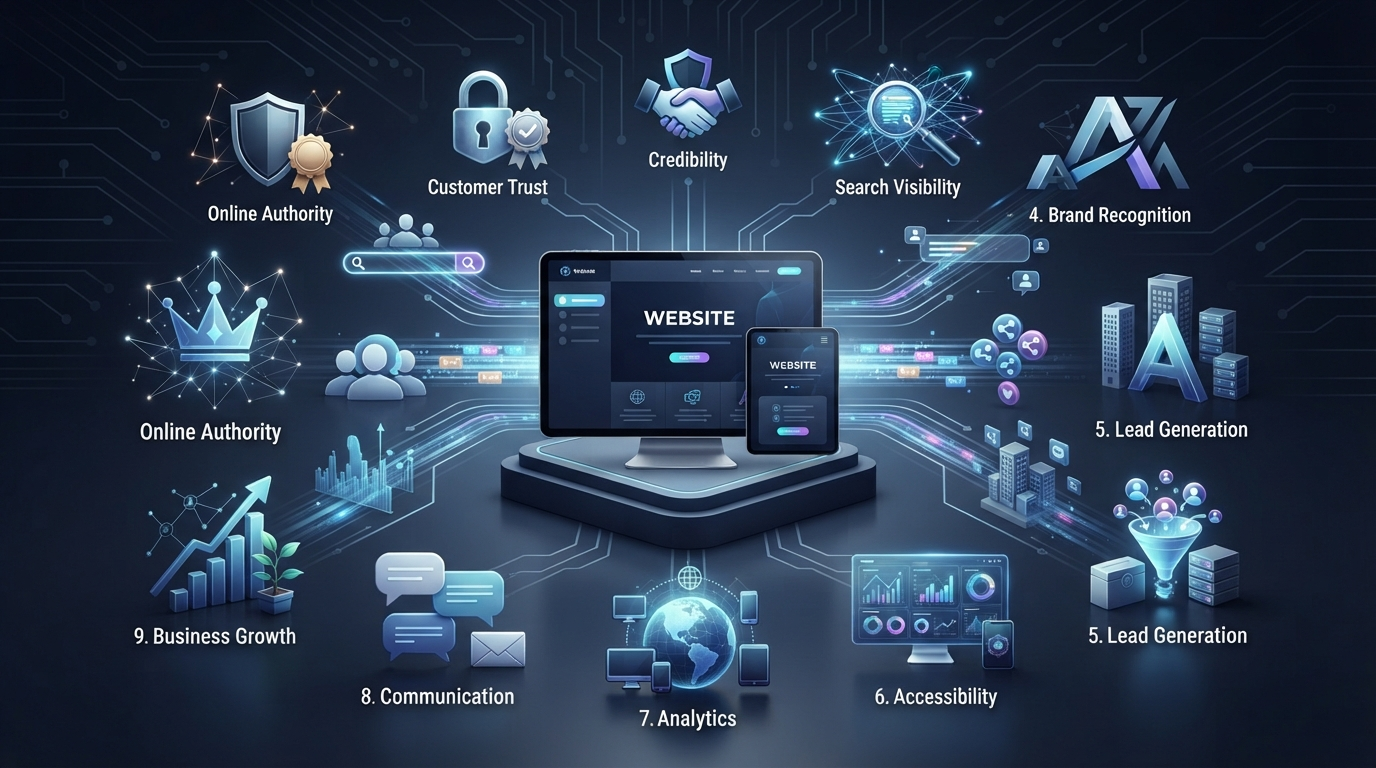
5. Differentiate Your Brand From Competitors
Competition is intense in almost every industry. If your website looks and sounds exactly like every other business in your market, visitors have little reason to remember your brand.
Use your website to explain your unique approach, methodology, experience, and perspective. Show visitors how your business solves problems differently.
You can also publish original frameworks, industry insights, research, case studies, and practical resources. These assets give your brand distinctive intellectual value instead of relying entirely on standard promotional language.
Differentiation is strongest when it is demonstrated rather than claimed.
6. Strengthen Your Industry Reputation
A website can become a central platform for demonstrating your brand’s contribution to its industry. Instead of only talking about your own products and services, use your website to educate the wider market.
Publish detailed guides, industry analysis, original research, expert opinions, reports, tutorials, and answers to common questions.
Over time, this creates a library of knowledge associated with your brand. Other businesses, customers, professionals, and content creators may discover and reference useful resources from your website.
This can expand your digital footprint beyond your immediate customer base.
7. Increase Conversion Opportunities
A website can support conversions at multiple stages of the customer journey. Not every visitor is ready to buy immediately, so your website should provide different ways for people to engage.
Someone in the research stage may want an educational guide. Someone comparing providers may want a case study. Someone ready to act may want a consultation form or direct purchase option.
By creating relevant content and calls to action for different levels of intent, you give visitors multiple opportunities to move forward.
8. Create Long-Term Marketing Assets
Website content can continue generating value long after publication. A well-written article can attract organic traffic, a detailed guide can generate leads, and a case study can help future customers evaluate your services.
This makes your website an expanding library of marketing assets.
Instead of constantly starting from zero, your business can build upon existing content, improve older pages, update information, and create new resources based on customer questions.
9. Reduce Dependence on Social Media
Social media can be useful for generating attention, but your brand does not control the platform, algorithm, or distribution system.
Your website gives you an owned digital environment where you control the content, structure, messaging, user experience, and conversion process.
Social media can send visitors to your website, while your website can provide the deeper information required to build trust and generate action.
This creates a more stable digital ecosystem for your brand.
Frequently Asked Questions
Digital authority is the credibility and recognition a brand develops online through expertise, valuable information, evidence, and consistent communication.
Yes. A professional website can demonstrate expertise, provide customer evidence, explain services clearly, and give visitors reliable information about the business.
Useful content demonstrates knowledge and helps potential customers solve real problems. Consistently providing accurate and valuable information can strengthen a brand's reputation.
SEO can help more people discover your expertise through search. However, visibility alone is not enough. The content must also provide genuine value.
Useful formats include educational articles, detailed guides, case studies, tutorials, research, industry analysis, FAQs, reports, and expert commentary.
Case studies demonstrate how your business has handled real problems and what outcomes were achieved. They provide evidence that supports your claims.
Yes. Small businesses can focus on a specific niche and demonstrate deep knowledge of the problems their target customers face.
Content should be updated when information becomes outdated, customer needs change, search performance declines, or new information becomes available. Quality matters more than an arbitrary publishing schedule.
In many cases, yes. Social media can generate awareness and attention, while the website can provide detailed information, proof, resources, and conversion opportunities.
Digital authority is built gradually. The timeline depends on factors such as your industry, competition, expertise, content quality, consistency, and existing reputation.
FINAL THOUGHTS
A website can become one of the most valuable authority-building assets your brand owns. But simply launching a website is not enough. It needs to demonstrate expertise, answer customer questions, provide evidence, communicate clearly, and create a professional experience.
The 10 benefits discussed above work together. Strong credibility supports trust. Useful content supports visibility. Visibility attracts potential customers. Proof supports conversions. Over time, these elements can create a stronger and more recognizable digital presence.
Your website should not simply tell people that your brand is an expert. It should give them enough evidence to understand why your brand deserves their attention.
- Contact Now
Turn Your Website Into a Digital Authority
If your website is not demonstrating your expertise, building trust, attracting relevant visitors, or supporting conversions, it is functioning below its potential.
Build a website that does more than display your brand. Create a strategic digital platform that educates your audience, showcases your expertise, strengthens credibility, and supports long-term business growth.